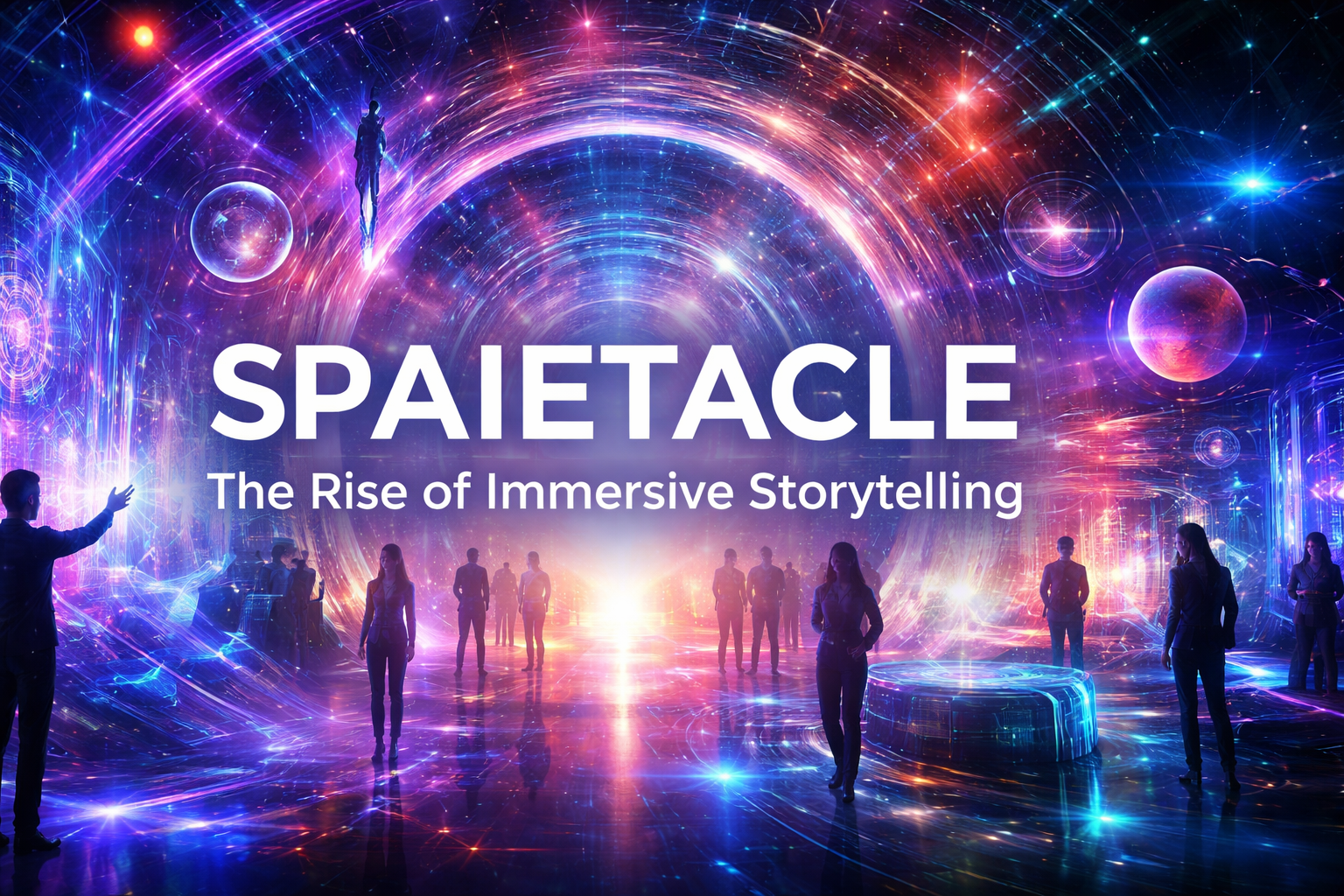
Spaietacle: The Rise of Immersive Storytelling in Modern Experiences
The modern digital era has transformed the way audiences interact with entertainment, art, and storytelling. Traditional forms of media once relied on passive viewing, where audiences sat back and simply watched performances unfold. However, the expectations of today’s audiences have changed dramatically. People now want to be part of the story rather than merely observe it from a distance. This shift in engagement has led to the emergence of Spaietacle, an innovative concept that combines immersive environments, storytelling, and advanced technology to create unforgettable experiences.
The term Spaietacle is often described as a fusion of the words space and spectacle. It represents a storytelling approach where the environment itself becomes part of the narrative. Instead of limiting storytelling to a stage or screen, Spaietacle transforms entire spaces into interactive worlds where audiences can explore, interact, and emotionally connect with the story.
Meaning and Concept of Spaietacle
At its core, Spaietacle is a concept that emphasizes immersive storytelling through spatial design. Unlike traditional forms of entertainment, where audiences remain separate from the performance, Spaietacle places participants directly within the environment of the story. In a Spaietacle experience, the physical or digital space becomes an essential storytelling medium. Lighting, sound, architecture, visual projections, and interactive technologies all work together to create an environment that surrounds the audience. Instead of simply observing events, participants become explorers within the narrative world.
This concept changes the relationship between storyteller and audience. In conventional storytelling formats such as films, theatre, or television, the narrative follows a fixed path. In contrast, Spaietacle often allows audiences to move through spaces freely, discovering different parts of the story through exploration and interaction. The immersive nature of Spaietacle encourages emotional engagement and curiosity. When participants feel physically present within the story environment, they develop a stronger connection to the narrative and its characters. This ability to combine spatial design with storytelling is what makes Spaietacle a powerful tool for modern creative expression.
- Immersion – audiences feel physically present within the story world
- Exploration – participants can move through environments and discover different narrative elements
- Interaction – characters and environments respond to audience actions
- Emotional engagement – the experience creates deeper personal connections
Because of these elements, each Spaietacle experience can feel unique for every participant.
History and Evolution of Spaietacle
Although the term Spaietacle is relatively new, its underlying principles can be traced back through centuries of theatrical and artistic innovation.
Early Theatrical Spectacles
In ancient civilizations, theatre was already designed to captivate audiences through spectacle. Elaborate costumes, music, and stage designs were used to create visually dramatic performances. These early productions aimed to evoke powerful emotions and transport audiences into the world of the story.
Renaissance Stage Innovations
During the Renaissance, theatre designers began experimenting with advanced stage mechanics and perspective scenery. Sophisticated lighting systems and moving stage elements allowed productions to create more dynamic visual environments. These innovations marked an early step toward immersive storytelling.
- Perspective scenery
- Mechanical stage systems
- Advanced lighting effects
- Moving stage elements
These innovations helped create visually dynamic performances that enhanced storytelling.
Multimedia Performance Experiments
The modern evolution of Spaietacle gained momentum in the late twentieth century. Artists began incorporating multimedia elements such as video projections, digital soundscapes, and interactive stage technology into performances. These developments expanded the creative possibilities for storytelling.
As digital technology advanced, immersive environments became more accessible. Today, immersive theatre productions, interactive exhibitions, and virtual reality experiences represent the contemporary expression of the Spaietacle concept.
Core Elements of a Successful Spaietacle Experience
Creating a compelling Spaietacle requires a careful balance of artistic creativity and technical expertise. Several key elements contribute to the success of an immersive experience.
Visual Design
Visual design forms the foundation of any Spaietacle environment. Lighting effects, projection mapping, architectural design, and digital graphics create the atmosphere that surrounds participants. These visual elements help establish the emotional tone of the narrative and guide audience attention throughout the experience.
Compelling Narrative
Even the most visually impressive environment requires a strong narrative to engage audiences. Spaietacle experiences often involve layered storytelling structures, where participants uncover different parts of the narrative as they explore the environment.
This storytelling method allows audiences to experience the narrative from multiple perspectives, making each visit unique.
Performers and Audience Interaction
Performers play a vital role in bringing immersive environments to life. Actors, dancers, and digital avatars interact directly with participants, encouraging them to become part of the story. These interactions can influence how the narrative unfolds, giving audiences a sense of agency within the experience.
Sound and Sensory Design
Sound design is another essential element of Spaietacle. Surround sound systems, ambient music, and environmental audio cues help create spatial awareness and emotional depth. Sensory elements such as temperature changes, textures, and scents can also be used to deepen immersion.
Technology Integration
Modern immersive experiences rely heavily on advanced technologies. Motion tracking systems, augmented reality tools, and interactive sensors allow environments to respond to participant behavior. Real-time rendering engines enable digital elements to evolve dynamically as the story progresses.
When these elements work together harmoniously, they create a seamless experience that feels both magical and believable.
Cultural Significance of Spaietacle
Spaietacle is not only a form of entertainment but also an important cultural medium. Immersive storytelling allows artists to explore complex themes related to identity, society, and human experience.
Cultural institutions such as museums and heritage centers increasingly use immersive design to present historical narratives in engaging ways. Instead of reading about history from static displays, visitors can walk through recreated environments and interact with digital characters representing historical figures.
This approach makes cultural education more accessible and engaging, particularly for younger audiences who are accustomed to interactive digital media. By combining artistic expression with technological innovation, Spaietacle creates new opportunities for cultural storytelling.
Artists and cultural institutions often use immersive experiences to explore themes such as:
- Cultural identity
- Historical events
- Social issues
- Community storytelling
- Human emotions and relationships
Museums increasingly adopt immersive storytelling techniques to make historical narratives more engaging.
Famous Spaietacle Shows and Experiences Around the World
Across the globe, immersive productions are pushing the boundaries of traditional entertainment. Interactive theatre companies create experiences where audiences move through different rooms, encountering scenes and characters as they explore. Digital art exhibitions often transform entire galleries into immersive visual environments using projection mapping and interactive technology. Visitors become part of the artwork itself, moving through constantly changing digital landscapes.
Theme parks also use immersive storytelling techniques to create attractions that feel like living narratives. Visitors are placed at the center of adventures where every detail of the environment contributes to the story. Museums and science centers are increasingly adopting immersive installations to present educational content in engaging ways. These experiences demonstrate how Spaietacle is shaping the future of both entertainment and learning.
Benefits of Spaietacle
- Enhances audience engagement by allowing participants to interact directly with the experience.
- Creates memorable experiences through immersive storytelling and sensory environments.
- Encourages active participation instead of passive observation.
- Strengthens emotional connection between audiences and the narrative.
- Supports creative collaboration between artists, designers, and technologists.
- Improves educational experiences through interactive and immersive learning environments.
Behind the Scenes: Creating a Spaietacle
The creation of a Spaietacle experience requires collaboration among many creative professionals. The process typically begins with concept development, where designers define the narrative theme, visual style, and emotional objectives. Next comes environment design and prototyping. Architects, visual designers, and digital artists create models of the immersive environment and test interactive features.
During the technical integration stage, engineers install lighting systems, projection technology, sound equipment, and interactive sensors. These technologies must work together flawlessly to maintain immersion. Finally, performers and technicians rehearse extensively to perfect the timing of interactions. Although the experience may feel spontaneous to participants, every element is carefully orchestrated behind the scenes.
Technology Behind Spaietacle
Technology plays a central role in enabling immersive experiences. Several advanced tools support the creation of Spaietacle environments. Virtual reality technology allows participants to enter entirely digital worlds where they can interact with characters and environments. Augmented reality overlays digital elements onto physical spaces, creating hybrid environments that blend reality and imagination.
Projection mapping technology transforms ordinary surfaces into dynamic visual displays. Walls, floors, and buildings can become animated storytelling platforms. Interactive sensors detect participant movements and trigger environmental responses. Game engines and 3D modeling software help designers build detailed digital worlds that support complex storytelling.
Important technologies include:
- Virtual Reality (VR) – creates fully immersive digital worlds
- Augmented Reality (AR) – adds digital elements to real environments
- Projection Mapping – transforms surfaces into animated visuals
- Interactive Sensors – allow environments to respond to participant movements
- Game Engines – build complex digital storytelling worlds
These tools allow creators to design environments that evolve dynamically during the experience.
Applications of Spaietacle in Different Industries
The principles of Spaietacle extend beyond entertainment into many other industries.
| Industry | Application |
| Education | Interactive simulations help students explore complex subjects |
| Healthcare | Medical professionals train through immersive virtual environments |
| Marketing | Brands create experiential campaigns that engage customers |
| Real Estate | Virtual property tours allow buyers to explore buildings remotely |
| Entertainment | Immersive theatre and digital exhibitions |
These applications demonstrate how immersive storytelling can enhance communication, learning, and customer engagement.
Challenges and Limitations of Spaietacle
Despite its potential, Spaietacle also presents several challenges. The production of immersive environments often requires significant financial investment. Advanced technologies and large creative teams can increase project costs. Technical complexity is another challenge. Designers must ensure that multiple technological systems operate smoothly together. Any technical malfunction can break the illusion of immersion.
Accessibility is also an important consideration. Immersive experiences must be designed to accommodate participants with diverse physical abilities and sensory needs. Many creators are addressing these challenges by developing modular technologies and scalable design approaches that reduce costs and improve accessibility.
Common challenges include:
- High production costs
- Technical complexity
- Need for specialized expertise
- Accessibility concerns
- Maintenance of immersive environments
To address these challenges, many creators are developing scalable technologies and modular design systems that make immersive experiences more accessible.
Future Trends of Spaietacle
The future of Spaietacle will likely be shaped by emerging technologies. Artificial intelligence may enable immersive environments to adapt in real time to audience behavior, creating personalized narrative experiences. The development of the metaverse and large-scale virtual environments could expand immersive storytelling into entirely new digital worlds.
Sustainable design is another growing priority. Creators are exploring environmentally friendly materials and energy-efficient technologies to reduce the ecological impact of large immersive installations. As these innovations continue to evolve, the possibilities for immersive storytelling will expand dramatically.
How to Create Your Own Spaietacle Experience
Creating a Spaietacle experience begins with a strong creative vision. Designers should start by defining the narrative theme and emotional goals of the project. Lighting, sound, and spatial design can be used creatively to build immersive environments even without expensive technology. Interactive elements should encourage audiences to explore and engage with the story.
Testing and audience feedback are essential for refining the experience. By observing how participants interact with the environment, creators can improve the design and strengthen the narrative impact.
Transformative Power of Spaietacle
One of the most remarkable aspects of Spaietacle is its ability to transform ordinary environments into extraordinary experiences. By engaging multiple senses simultaneously, immersive storytelling creates powerful emotional connections. Participants often leave these experiences feeling inspired, reflective, and energized. This emotional impact makes Spaietacle an important tool for artists, educators, and innovators who want to create meaningful experiences.
Benefits of immersive storytelling include:
- stronger emotional connections
- memorable experiences for audiences
- deeper engagement with narratives
- creative collaboration between disciplines
Participants often leave immersive experiences feeling inspired, reflective, and creatively energized.
Conclusion
Spaietacle represents a new frontier in storytelling and experiential design. By combining spatial environments, advanced technology, and interactive narratives, it transforms how audiences engage with stories.
From entertainment and education to marketing and cultural expression, the influence of Spaietacle continues to grow across industries. As immersive technologies evolve, creators will gain even greater opportunities to design experiences that inspire and captivate audiences around the world.